
The Webster Lab at North Dakota State University is working with the Pulse, Soybean, and Corn RACs to develop predictive models for multiple crop pests. The overall goal of these RACs is to develop improved decision-support tools that can be used by farmers and agricultural professionals across the U.S. to optimize pesticide applications for pest management. Through the support of NPMTI, we have had strong success within the Corn RAC, while the Pulse RAC is still in its early stages, and the Soybean RAC is just beginning in 2026.
For the Pulse RAC, we have collectively met with all members to develop a standardized field-sampling protocol for evaluating risk from soilborne pathogens, including Fusarium and Aphanomyces. Cooperators across Washington, Montana, and North Dakota will collect soil samples during the 2026 growing season, conduct diagnostic testing on those samples, and identify which pathogens are present in each field. These same fields will be evaluated later in the season for disease development, with a specific focus on root rot. Simultaneously, these fields will also be evaluated using a new risk tool developed during the winter of 2026 called PulSAR, or Pulse Soilborne Assessment of Risk. This tool will assign field-level risk for root rot development based on specific economic and environmental conditions. Risk levels will be assigned at the beginning of the season, root rot development will be monitored during the growing season, and tool performance will be validated at the end of each season. The intent is for this sampling program to be conducted over multiple years to allow for strong validation and eventual deployment of the tool through the Crop Protection Network.
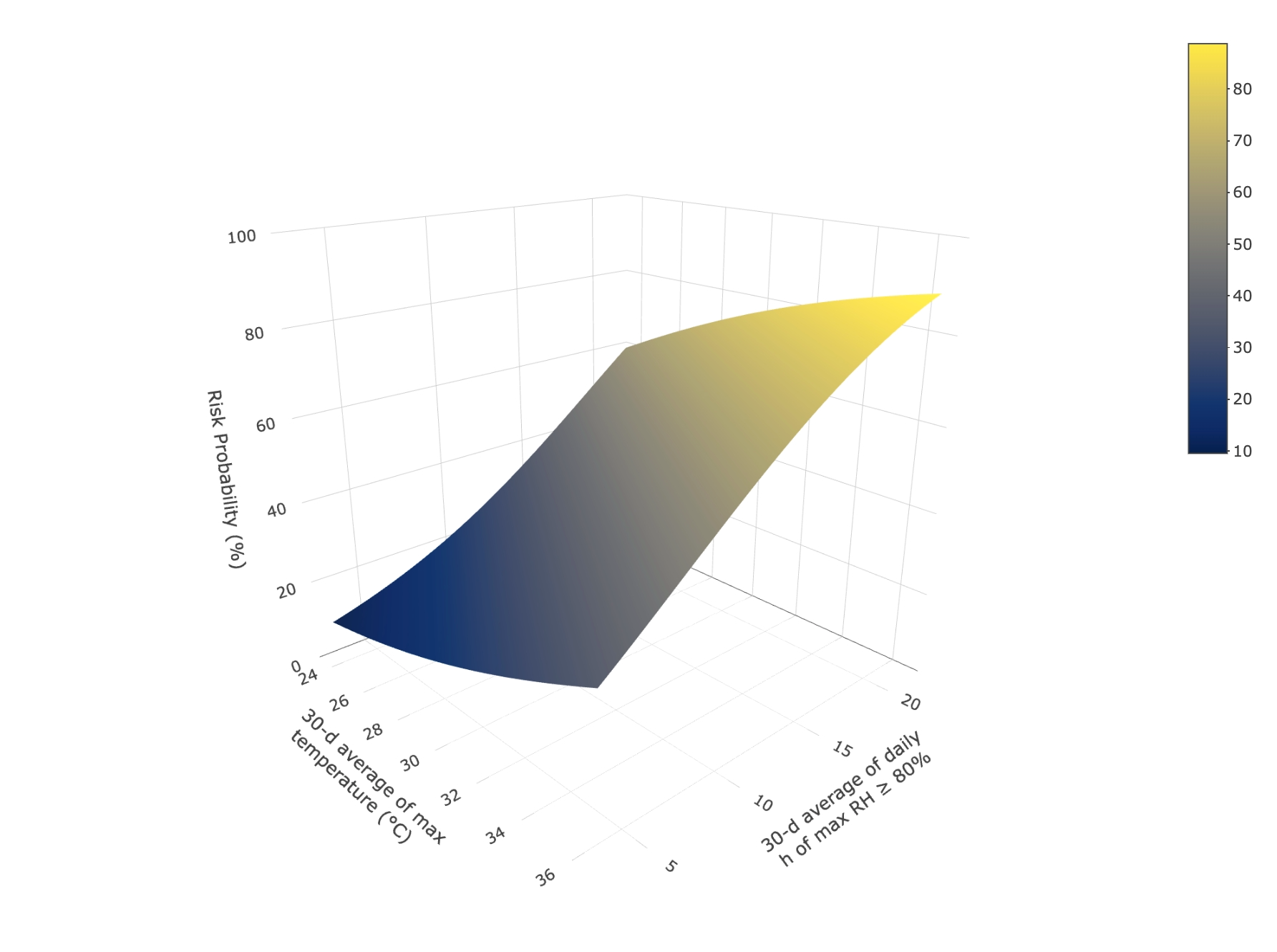
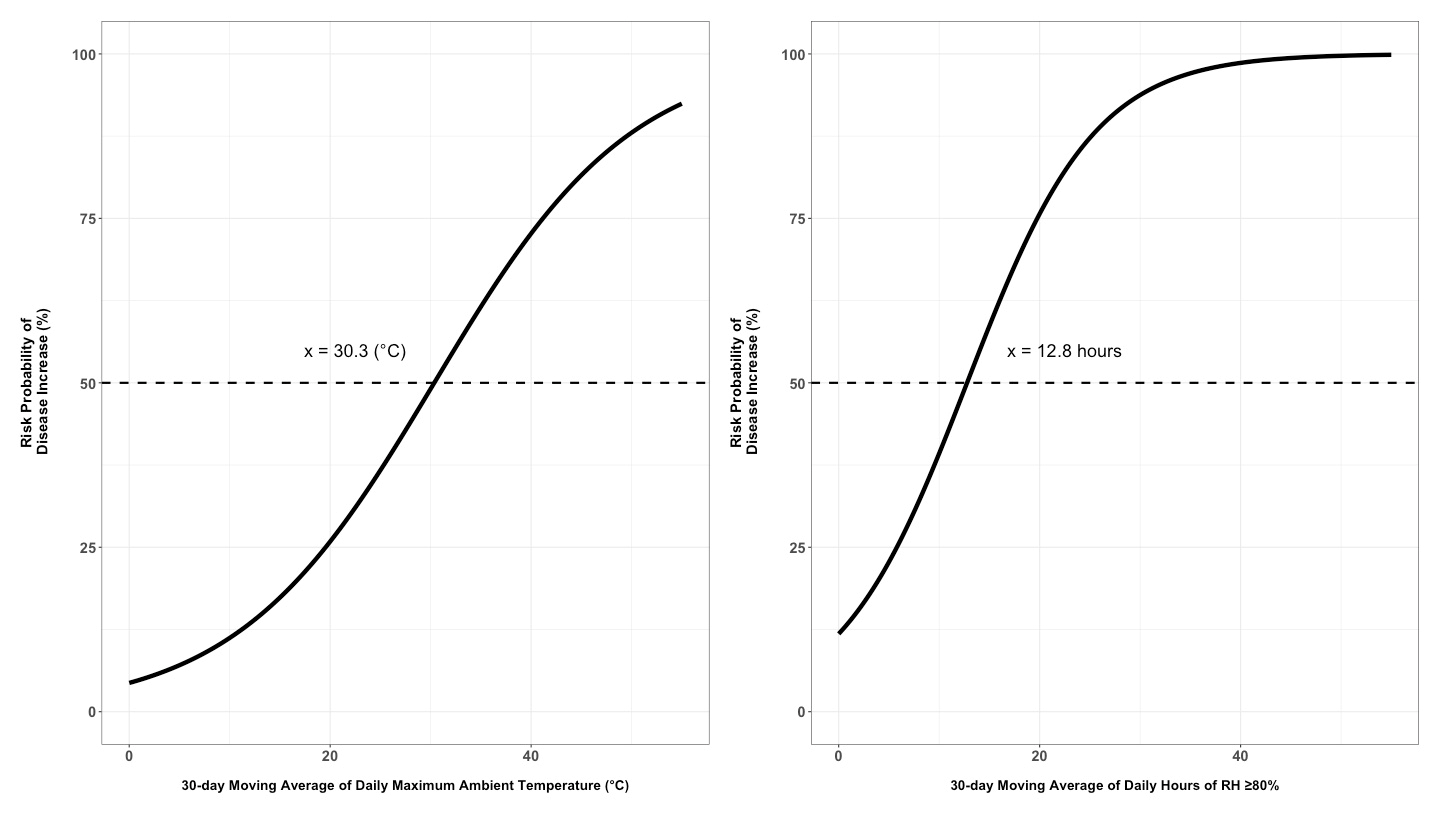
The Soybean RAC is beginning in 2026 and includes members from North Dakota, Iowa, Illinois, Minnesota, Louisiana, and Kentucky. This team has met multiple times during the spring of 2026 to formulate a long-term plan for developing predictive models for soybean pest management, including both diseases and insects. Preliminary logistic regression models have already been developed for frogeye leaf spot (Figs. 1 and 2), and these models are now hosted on the Crop Protection Network Crop Risk Tool. We have also had success adding insect phenology risk models to the Crop Risk Tool in spring 2026, led by Dr. Anthony Hanson and Ben Bradford. To expand upon these early successes, we are developing models to predict the spore presence of Cercospora species, which cause Cercospora leaf blight. In addition, we are developing plans to predict soybean diseases using satellite imagery, while continuing to validate models for frogeye leaf spot and white mold across the U.S.
The Corn RAC has been an established group for several years, and the Webster Lab is directly involved in the creation and deployment of new models for different corn diseases. In spring 2026, new tar spot and northern corn leaf blight models have been developed and are being integrated into the Crop Protection Network Crop Risk Tool. Additional models will be developed in the future as datasets become available from ongoing scouting and disease monitoring efforts.