Collaborator: Dr. Xianming Chen, USDA-ARS Pullman, Washington
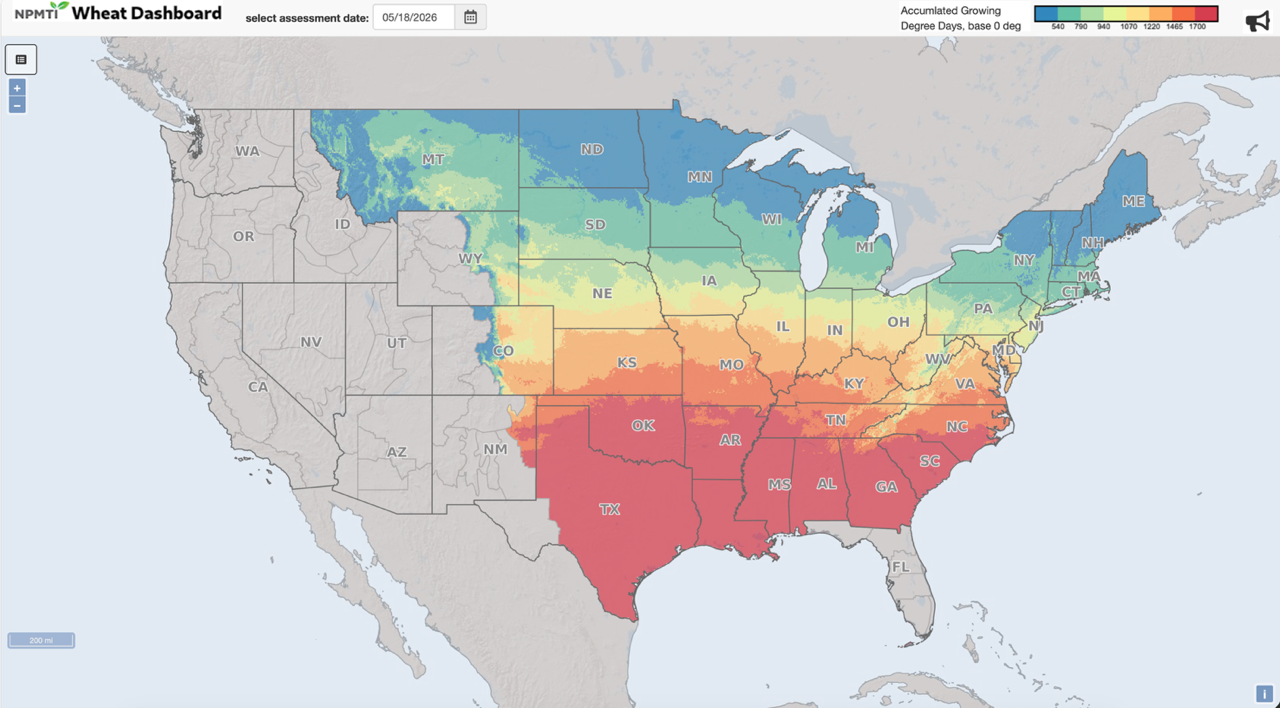
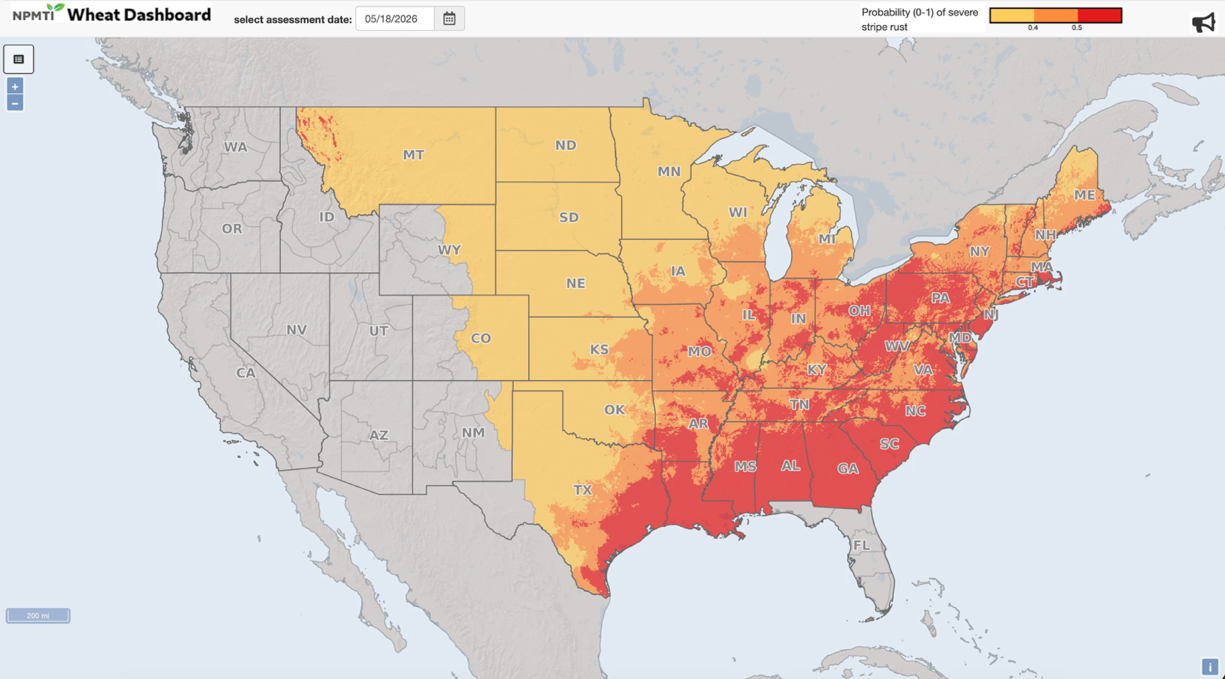
The Wheat Research Area Committee has successfully developed a suite of models that will help us estimate the risk of multiple wheat diseases and environmental stress events that threaten wheat production in the US nearly every year. These models are based on a dataset of over 1,200 observations, which provides a rich resource for model development and testing. Key successes this past year included:
The Wheat Research Area Committee (Wheat RAC) also has active modeling projects for wheat leaf rust and Parastagonospora leaf blotch. These models leverage the infrastructure developed by the Wheat Research Area Committee to estimate the risk of severe leaf rust based on local weather conditions and the resistance level of the wheat variety planted. These models are currently being tested and verified prior to public deployment. We have projects investigating the emerging risk of fungicide resistance in wheat pathogens and the potential that fungicide resistance will negatively influence disease management in the US.
We are also expanding the stripe rust model to account for the effects of high temperatures on disease outbreaks. Stripe rust development is often slowed by periods of high temperatures (> 70 F). Preliminary results indicate that additional features should help to further improve the accuracy of predictions for stripe rust in the US. The Wheat RAC has also partnered with USDA scientists in Pullman, Washington, to adapt the stripe rust models for use in the wheat production regions of the Pacific Northwest. This includes testing and refining the models based on observations of stripe rust outbreaks collected over the past 40 years.
The wheat RAC will continue to develop and refine models for stripe rust, leaf rust, and Parastagonospora leaf blotch over the next year. The wheat growth model stripe rust forecasting tools are already available to the public, and plans are in place to add models for leaf rust and leaf blotch over the next 12 months. We will also expand our modeling effort to consider additional foliar diseases, including tan spot and Zymoseptoria tritici blotch. Our partnerships with the University of Kentucky and North Dakota State University will help accelerate these modeling efforts. We also plan to partner with the Crop Protection Network to provide additional tools for growers across the US to use in the near future.